At Point 6, we have created a culture where our employees feel safe and supported. We want to ensure that when a colleague is having a bad day, or a difficult time, they know that there are people they can talk to who will help them through it, without judgement.
Mental health is as important as physical health. It requires both careful upkeep and preventative measures. In the same way that we exercise, eat well, and get plenty of sleep to avoid physical illness, mental health necessitates the same level of maintenance. But on top of exercise, sleep, and eating, mental health demands talking.
As the saying goes, a problem shared is a problem halved. We know that talking to someone honestly about how you are feeling helps you feel less alone and your problems to seem more manageable. That's why we must all make our workplaces an environment where employees are comfortable to be open with each other when needed.
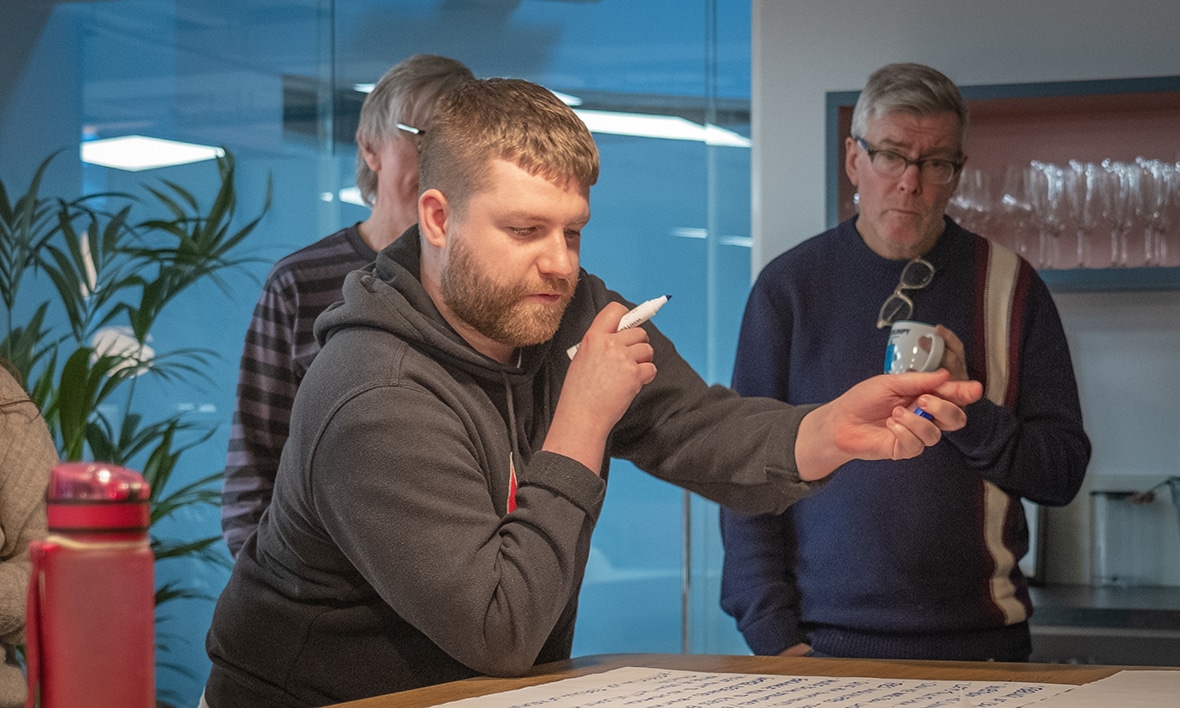
Our recent mental health first aid workshop with Peter Larkum from Mentality highlighted the benefits of open discussions about mental health in the workplace and the importance of creating a culture where these are possible.

The goals of the workshop were to help us learn to manage our wellbeing proactively, identify signs of poor mental health in our colleagues and selves, give us the tools to help in-the-moment, and guide us towards resources and support.
Over the three-hour workshop, we took part in a variety of group discussions and activities. Though mental health is not an easy conversation to have, Peter strives to eliminate the stigma surrounding it, and his work is backed up by 20 years of experience in mental health support.
He immediately put the team at ease and filled the workshop with fun exercises and plenty of light-hearted humour. In this relaxed and friendly atmosphere, the topic of mental health became less daunting.
Key Takeaways
Thorns, buds and roses
If you have ever struggled to get an honest and meaningful conversation going with a colleague, this method can help get you started. Ask someone what the 'thorns', 'buds' and 'roses' are in their life right now.
The 'thorn' is something that is troubling or upsetting you at that moment. It might be a monumental event in your life, but it could also be something small, like a broken nail that is bothering you. This question provides a great opportunity to share as much or as little as you like.
The 'bud' is what you are looking forward to in the next 48 hours. It's a good way to form connections with people and creates an opening for follow up conversations about how that 'bud' went.

The 'rose' is what is bringing you joy right now. This serves as a reminder that no matter how sharp the thorns might feel, there are always good things happening too. Remember, mental health conversations are as much about the good as well as the bad.
Having a conversation with a colleague in terms of 'thorns, buds and roses' allows you both to have the space to talk and gain a better understanding of what is happening in your colleague's life that may be affecting them emotionally. When it is hard to open up a conversation about feelings, this tool is one way to do it without forcing an agenda on the other person.
More good days than bad
Everyone has bad days, and everyone has good days. It can be comforting to recognise that you are not alone in this, it's a normal part of life. But managing a positive mental health means making it so that you have more good days than bad.
Types of listeners
When it comes to talking about mental health, it's a two-way street, and listening is just as important as speaking. Sometimes we make mistakes in the ways that we listen that can lead the speaker to feel even more isolated. For example, giving hollow reassurances, turning the topic back to ourselves or changing the topic of conversation entirely.
There is a danger that the speaker might become unwilling to share in the future. The best (and probably simplest) way is to just listen, acknowledge that the other party is going through a tough time and offer them the support they need.
Spotting someone in the workplace who needs support
It can be difficult to identify when a colleague is having a hard time because they might not necessarily want to share details of their personal life at work. Hopefully, you will have managed to build a culture where people feel comfortable speaking up and seeking support when needed, but even then, it can still be tricky.
So, it is vital to be attentive and vigilant of what Peter describes as people's 'normal level of weird'. 'Level of weird' is a way to describe our typical behaviour, whilst acknowledging that there is no 'true normal'. We are all unique and have our own personalities, reactions, and quirks. Everyone has a typical 'level of weird' and changes to those levels can be an excellent indicator that they are struggling with their mental health.
Resources
May 15-21 is Mental Health Awareness week and the focus this year is anxiety, one of the most common mental health issues. Find out how you and your company can get involved and help spread awareness about mental health on the Mental Health Foundation website.
If you or a colleague is struggling with mental health, there are many resources available to help. Check what resources your company has available for employees, and who the company's mental health first aiders are.
If you think extra support is necessary, any of the following resources can be used. Whether you require general support or have an urgent need, reach out to:
- Samaritans online or over the phone on 116 123
- Shout by texting 'Shout' to 85258
- Hub Of Hope which helps you find support near your postcode (this is also a useful resource to help you find support for a loved one in who lives elsewhere in the UK)
We encourage you to open up conversations about mental health in your workplace to create a healthier, safer environment for you, and your colleagues and employees. We believe that mental health training should be standard in businesses. Why not start by checking out Peter's website and see what he can do for you and your company?